
Neck Pain, Headaches and Jaw Tension: Could They Be Connected?
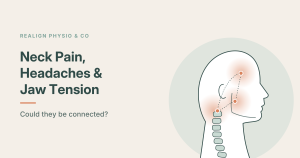
Ever finished a long day at your desk with a headache, a stiff neck and a tight jaw? These symptoms often show up together, and that’s not always a coincidence.
The neck, head and jaw share muscles, joints and nerve pathways. When one area is irritated, you can feel it in another. But the link isn’t the same for everyone, which is why it pays to look beyond where it hurts.
How are they connected?
Nerves from the upper neck and the nerve that supplies sensation to your face meet in the same part of the brainstem. That’s one reason pain that starts in your neck can be felt as a headache.
Tight or overworked jaw muscles can also send pain towards the temples, face and neck. Neck pain and jaw tension often turn up together, even when one isn’t causing the other.
Can your neck cause headaches?
Yes. A cervicogenic headache is a headache that comes from the neck. Common signs include:
- Pain that starts at the base of the skull and spreads forward
- Pain that is often one-sided
- Stiffness or reduced neck movement
- Headaches brought on by certain neck movements or positions
These signs alone don’t confirm it. Migraines and tension-type headaches can feel very similar, so a proper assessment matters.
What about the jaw?
Temporomandibular disorders (TMD) affect the jaw joints and chewing muscles. They can cause jaw pain, stiffness, difficulty opening your mouth and headaches around the temples. Clenching, grinding and stress can all play a part.
The good news? Jaw clicking without pain is common and usually nothing to worry about. If you grind your teeth at night, your dentist is often the first to notice, and physio and dental care work well together.
Is it just my posture?
Not exactly. There’s no single perfect posture. What matters more is not staying in one position for too long. Changing position often, taking movement breaks and keeping your neck strong usually helps more than trying to sit “perfectly” all day.
What you can try at home
- Rest your jaw: lips together, teeth slightly apart, tongue resting on the roof of your mouth.
- Catch the clench: notice whether you clench during screen work, driving or exercise.
- Go easy during a flare: choose softer foods and skip the chewing gum.
- Keep moving: gentle neck movement and regular breaks beat staying still.
- Look after sleep and stress: both affect how sensitive your body is to pain.
How Can Physiotherapy Help?
When neck pain, headaches and jaw tension occur together, an individual assessment helps work out whether the cervical spine, surrounding muscles or other factors are contributing.
At Realign Physio & Co, every assessment starts with understanding your symptoms, medical history and the activities you’re finding difficult. Depending on your presentation, it may include:
Neck movement and function
Your physiotherapist may assess neck mobility, strength, how your symptoms respond to movement, and how your neck copes with the activities that matter to you.
Muscle function and sensitivity
The muscles around your neck, shoulders and upper back may be assessed for tenderness, reduced capacity or altered movement patterns that could be relevant to your symptoms.
Jaw movement and related symptoms
Where appropriate, your physiotherapist may look at jaw movement and how your jaw symptoms relate to your neck. Suspected dental or more complex jaw conditions may need assessment by a dentist or another suitably qualified practitioner.
Whole-body posture and movement
We also offer approaches such as Global Postural Re-education (GPR), which looks at how the neck relates to whole-body posture and breathing patterns. Whether it’s suitable depends on your assessment findings.
A personalised treatment plan
Treatment is guided by what we find and may include targeted exercises, movement retraining, education, and manual therapy where appropriate.
For cervicogenic headache, research supports combining manual therapy with specific neck exercises. In one well-known clinical trial, this approach reduced headache frequency, with benefits still present a year later. For certain temporomandibular disorders, evidence also supports conservative approaches such as supervised exercises, education and selected manual therapy techniques.
No single treatment suits everyone. The aim is to identify what matters in your case and build a plan that makes a meaningful difference to your daily life.
Can Pilates Help With Neck Pain and Headaches?
Clinical Pilates can be a useful part of rehabilitation for some people with neck discomfort, particularly when the goal is better strength, movement control and confidence with exercise.
Rather than focusing only on stretching tight muscles, a tailored program builds the strength and endurance needed for everyday activities. This includes the deep neck muscles that research has linked to improvements in neck-related headaches.
At Realign, our clinical and studio Pilates sessions offer a supervised setting where exercises are adapted to your needs and abilities.
Pilates isn’t a universal treatment for headaches or jaw disorders, though. The right approach depends on what’s causing your symptoms, how well you tolerate exercise, and any other health considerations.
If your headaches are frequent, your jaw is painful or your neck symptoms aren’t settling, an assessment can help determine whether Pilates is right for you and whether other care is needed first.
When to get help urgently
Not every headache comes from the neck. Call 000 or go to your nearest emergency department if you have:
- A sudden, severe headache, the worst you’ve ever had
- New weakness, numbness, confusion, slurred speech, vision loss, dizziness or trouble swallowing
- A headache with fever and a stiff neck, or after a head or neck injury
See your GP promptly for a new type of headache after age 50, headaches that wake you up or get worse with coughing or lying down, or headaches that keep getting worse.
Final thoughts
Neck pain, headaches and jaw tension can be connected, but what’s driving them is different for everyone. The key is understanding your symptoms, not guessing.
Book an Assessment
If neck pain, headaches or jaw tension are affecting your work, sleep or daily life, our team can help you find out what’s going on and what to do about it. Book online or contact our Robina clinic today. No referral needed.
Recent Comments