
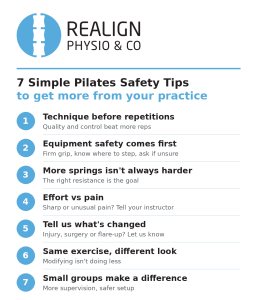
Pilates Safety: 7 Simple Things That Help You Get More From Your Practice
Pilates can be a great way to build strength, improve movement and develop better body awareness. But one of the most important parts of Pilates is understanding that the same exercise doesn’t necessarily suit everyone in the same way.
Your experience, strength, mobility, previous injuries and even how your body is feeling that day can all influence how an exercise should be performed.
Here are some simple things that can help you get more from your Pilates sessions while keeping your practice safe and effective.
1. Good technique comes before more repetitions
It can be tempting to focus on completing every repetition, but Pilates is about quality and control.
If you’re losing control of the movement, holding your breath or compensating with another part of your body, it may be time to slow down or modify the exercise.
Sometimes, doing fewer repetitions with better control is far more beneficial than simply doing more.
2. Pay attention to the equipment — safety comes first
Pilates equipment allows us to perform a huge variety of exercises, but it also needs to be used correctly.
Small details can make a big difference to your safety. For example:
- When using the Cadillac/Tower, always make sure you have a firm grip on the bar when instructed, and never suddenly let go while the springs are under tension.
- When performing standing exercises on the Reformer, follow your instructor’s instructions about where to step. In many exercises, you should step onto the stable platform/board first rather than stepping directly onto the moving carriage.
- Make sure springs, straps, footbars and other equipment are correctly positioned before beginning an exercise.
- Don’t move or adjust equipment under tension unless you have been shown how to do so safely.
These might seem like small details, but they are an important part of learning Pilates.
Your instructor should explain how to use the equipment safely, and if you’re ever unsure, stop and ask before continuing.
3. More springs don’t always mean a harder exercise
It’s easy to assume that adding more springs automatically makes an exercise more challenging. But that’s not always the case.
Depending on the exercise, using fewer springs can actually make it significantly more challenging because you may have less assistance or stability from the equipment.
For example, changing the spring resistance can alter how much control, balance or strength you need to perform a movement.
That’s why your instructor may give you a different spring setting from someone else — or even change your springs during the same exercise.
The goal isn’t to use the most springs or the least springs. The goal is to use the right amount of resistance for the exercise and for you.
4. Learn to recognise the difference between effort and pain
It’s normal to feel your muscles working during Pilates. You may feel fatigue, effort or a gentle stretch.
However, sharp, pinching, sudden or unusual pain shouldn’t simply be pushed through.
If something doesn’t feel right, let your instructor know. An exercise may need a small adjustment, a different setup or a completely different variation.
5. Let your instructor know when something has changed
Your instructor can’t see everything you’re experiencing.
If you’ve recently had an injury, surgery, experienced a flare-up of an existing condition, or simply feel different from usual, let them know before starting your session.
Even something that seems unrelated to Pilates can be important when deciding which movements are appropriate for you that day.
6. The same exercise can look different from person to person
One of the benefits of Pilates is that exercises can be adapted.
A bridge, roll-down, plank or standing exercise doesn’t have to look exactly the same for everyone. An instructor may change the range of movement, resistance, position or even choose a different exercise to achieve the same goal.
Modifying an exercise isn’t “doing less”. It’s choosing the version that is right for your body at that moment.
7. Why a small group can make a big difference
Pilates isn’t only about the exercises you do — it’s also about the supervision and individual attention you receive while doing them.
In a large class, it can be difficult for one instructor to observe everyone’s technique, equipment setup and movement quality at the same time.
In a smaller group, the instructor can pay closer attention to each person and make adjustments when needed — whether that’s changing a spring, correcting positioning, modifying an exercise or helping you use the equipment safely.
This is particularly valuable for people who are new to Pilates, returning after an injury or working with specific movement limitations.
At Realign, our Pilates classes are semi-private Studio Pilates sessions
At Realign, our Studio Pilates sessions are designed as semi-private sessions with a small number of participants, rather than large reformer group classes.
This allows our instructors to work more closely with each person and adapt exercises according to their individual needs, experience and goals.
Our Studio Pilates sessions use a range of Pilates equipment, including the Reformer, Cadillac, Wunda Chair, Barrel and other studio equipment, rather than focusing only on Reformer exercises.
This approach allows Pilates to be more individualised and gives the instructor more opportunities to adapt the session to the people in front of them.
Pilates isn’t one-size-fits-all
Good Pilates isn’t about everyone in the room performing identical movements.
It’s about understanding the purpose of an exercise and knowing how it can be adapted to the person performing it.
An instructor who understands movement and individual limitations can help identify when an exercise should be progressed, modified or replaced — and can also make sure you’re using the equipment safely.
So next time your instructor changes your spring, adjusts your position or gives you a different version of an exercise, remember: it’s not necessarily because you’re doing something wrong. It may simply be because your body needs something different.
The goal is not just to complete an exercise.
It’s to move well, build confidence and make Pilates work for you.
It’s More Than Physical: The Connection Between Pain and Mental Wellbeing
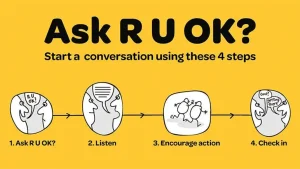
This R U OK? Day, on 10 September, we’re reminded to check in with the people around us — but it’s also a good opportunity to check in with ourselves.
When we think about pain, we often focus on what is happening physically — an aching back, a sore shoulder, a stiff neck or an injury that just won’t seem to settle. But pain is not only a physical experience.
Persistent or recurring pain can affect our mood, sleep, confidence, motivation and ability to do the things we enjoy. At the same time, stress, poor sleep and emotional wellbeing can influence how we experience pain.
The pain–wellbeing connection
When pain sticks around, it’s completely understandable to feel frustrated, worried or overwhelmed. You might start avoiding activities you enjoy because you’re afraid of making things worse, move less because you’re uncomfortable, or find yourself thinking constantly about your symptoms.
Over time, this can create a cycle:
Pain → less movement → reduced confidence → frustration or stress → increased sensitivity to pain → more pain.
This doesn’t mean that pain is “all in your head”. Your pain is real. It means that pain is influenced by many different factors, including what is happening in the body, how well you’re sleeping, your stress levels, your environment and your previous experiences with pain.
Movement can be part of the solution
When you’re in pain, stopping everything can sometimes feel like the safest option. But complete rest isn’t always the answer.
The right type and amount of movement can help maintain strength, confidence and independence, while gradually helping you return to the activities that matter to you.
This doesn’t mean pushing through pain or ignoring your symptoms. It means finding an appropriate starting point and progressing at a pace that works for you.
Don’t underestimate the importance of connection
Pain can also make us withdraw. We may skip social activities, stop exercising or avoid doing things we once enjoyed.
Staying connected with the people and activities that are important to you can be an important part of looking after your overall wellbeing.
And sometimes, the first step is simply talking about how you’re feeling.
So, are you okay?
This R U OK? Day, take a moment to check in with yourself.
Are you sleeping well?
Are you still doing the things you enjoy?
Has pain been affecting your mood or your everyday life?
Have you been putting off asking for help?
You don’t have to wait until things become overwhelming before reaching out.
If pain is affecting your daily life, a physiotherapist can help you understand what may be contributing to your symptoms and find an appropriate way to get you moving again.
And if you’re struggling with your mental wellbeing, talking to your GP or a mental health professional can be an important step.Looking after your physical health is part of looking after your overall wellbeing. This R U OK? Day, don’t just ask someone else — ask yourself: “Am I okay?”
Muscle Scraping Therapy: What Is It and Does It Really Work?
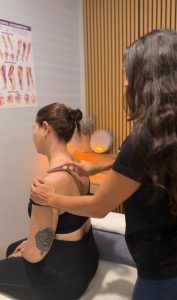
If you’ve recently had a sports massage or seen one of our therapists using a smooth stainless steel tool during treatment, you may have wondered what it was for.
This technique is called Instrument-Assisted Soft Tissue Mobilisation (IASTM), more commonly known as muscle scraping. It’s an evidence-based treatment used by physiotherapists and massage therapists to help reduce pain, improve movement, and support recovery from injury.
At Realign Physio & Co, our massage therapist incorporates muscle scraping into sports massage treatments whenever it’s clinically appropriate. It can also be included in remedial massage sessions if requested and recommended for your condition.
What Is Muscle Scraping?
Despite its name, muscle scraping doesn’t actually “scrape” your muscles. The treatment uses specially designed stainless steel instruments that gently glide over the skin using massage oil or balm.
The therapist uses the tools to assess and treat areas where the muscles and connective tissues (fascia) feel tight, restricted, or irritated. The shape of the instruments allows for more precise pressure than hands alone, making it easier to target specific areas of tension.
You may notice some redness after treatment. This is a normal response caused by increased circulation to the area and usually settles within a day or two.
How Does It Work?
For many years, people believed muscle scraping worked by “breaking up scar tissue” or “releasing fascia.” While these explanations are still common online, current research suggests the benefits are more complex.
Muscle scraping appears to work by:
- Stimulating the nervous system, helping reduce pain sensitivity.
- Improving the way muscles and connective tissues move and glide over one another.
- Encouraging healthy tissue remodelling during the healing process.
- Increasing local blood flow for a short period after treatment.
- Improving range of motion and flexibility.
Rather than physically breaking apart tissue, the technique helps your body respond to pain and movement more effectively.
What Are the Benefits?
Research has shown that IASTM may provide several benefits when used as part of an overall treatment plan.
Pain Relief
Many people experience a reduction in muscle and joint pain after treatment. Studies have reported positive outcomes for conditions such as:
- Neck and shoulder pain
- Tennis elbow
- Plantar fasciitis
- Achilles tendinopathy
- General muscle tightness and soreness
The pain relief is thought to occur through changes in the nervous system that reduce pain sensitivity.
Improved Flexibility and Range of Motion
One of the strongest areas of evidence is improved flexibility.
Muscle scraping may help increase movement in tight muscles and joints, including the calves, hamstrings, hips, shoulders, and upper back. This can be particularly beneficial before returning to sport or exercise.
Faster Recovery After Exercise
Athletes often use muscle scraping as part of their recovery routine.
While it doesn’t magically repair muscles faster, it may help reduce feelings of stiffness, improve mobility, and prepare the body for the next training session.
Support During Rehabilitation
Muscle scraping is often used alongside strengthening exercises and physiotherapy for tendon-related injuries, including:
- Achilles tendinopathy
- Tennis elbow
- Golfer’s elbow
- Patellar tendinopathy
It’s important to remember that the best outcomes come from combining hands-on treatment with an appropriate exercise program.
Better Soft Tissue Mobility
People who spend long hours sitting, perform repetitive work, or train regularly can develop areas of muscle tightness that limit comfortable movement.
Muscle scraping can help improve how these tissues move, making everyday activities and exercise feel easier.
Does It Hurt?
Treatment should never feel unbearable.
Some areas may be tender, particularly if the muscles are already tight or irritated, but your therapist will always adjust the pressure to suit your comfort.
After treatment, it’s common to experience mild tenderness similar to what you might feel after a deep tissue massage. Some people also develop temporary redness or light bruising, which usually settles within a few days.
Is Muscle Scraping Right for Everyone?
Muscle scraping isn’t suitable for every condition or every person. Your therapist will assess your symptoms, medical history, and goals before deciding whether it’s an appropriate treatment.
It may be recommended if you’re experiencing:
- Muscle tightness
- Sports-related aches and pains
- Reduced flexibility
- Tendon pain
- Ongoing stiffness affecting movement
Experience the Difference
At Realign Physio & Co, we believe every treatment should be tailored to the individual. Muscle scraping is just one of the many techniques we use to help reduce pain, improve movement, and support long-term recovery.
If you’re booking a sports massage, your therapist may incorporate muscle scraping as part of your treatment when it’s clinically appropriate. If you’re coming in for a remedial massage, simply let us know if you’re interested, and we’ll discuss whether it’s suitable for your needs.
If you’re curious about muscle scraping or wondering whether it could help you move and feel better, we’d be happy to answer your questions at your next appointment.
Book your massage today and discover how evidence-based hands-on therapy can help you recover, move more freely, and perform at your best.
The Mid-Year Body Check: 7 Signs Your Body Is Asking for Attention
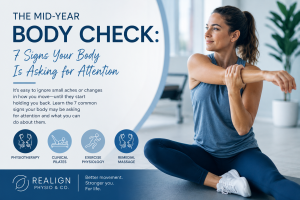
The halfway point of the year is a great opportunity to check in with yourself. While many people review their finances, career goals or New Year’s resolutions, few stop to consider how their body is coping.
Over time, it’s easy to adapt to aches, stiffness or reduced mobility. What starts as a mild discomfort can gradually become your “new normal”, making it easy to ignore until it begins interfering with your work, hobbies or everyday activities.
The good news? Many musculoskeletal issues respond best when addressed early. Rather than waiting until you’re in significant pain, use this mid-year body check to see how you’re really feeling.
1. You Wake Up Stiff Most Mornings
Do your first few steps out of bed feel uncomfortable? Does your back, neck or hips loosen up only after you’ve been moving for a while?
Morning stiffness can be a normal part of ageing, but it can also indicate tight muscles, joint restrictions, arthritis or reduced mobility. If the stiffness lasts more than 30 minutes or is becoming more frequent, it’s worth having it assessed.
Simple mobility exercises, strength training and targeted treatment can often make a significant difference.
2. You’re Avoiding Activities You Used to Enjoy
Have you stopped gardening because your back hurts? Are you skipping walks because your knees ache? Perhaps you’re avoiding lifting your grandchildren or saying no to social sports because you’re worried about pain.
Changing your lifestyle to avoid discomfort may seem like a sensible solution, but over time it often leads to reduced strength, decreased fitness and even more pain.
The goal shouldn’t be to do less—it should be to help your body do more comfortably.
3. Small Aches Never Quite Go Away
Everyone experiences occasional soreness after exercise or a busy week. However, pain that lingers for weeks or keeps returning isn’t something you should simply accept.
Recurring headaches, shoulder tightness, lower back pain or sore knees are often signs that something isn’t functioning as well as it could.
Addressing these issues early may help prevent them from developing into more significant injuries.
4. Your Strength or Balance Isn’t What It Used to Be
Have you noticed you’re less steady on your feet? Do stairs feel harder than they did six months ago? Are everyday tasks becoming more physically demanding?
Loss of strength and balance isn’t inevitable, and it certainly isn’t something to ignore.
Regular strength and balance training can help reduce the risk of falls, improve confidence and make daily activities much easier, regardless of your age.
5. You’re Sitting More and Moving Less
Many Australians spend long hours sitting at a desk, driving or using electronic devices. While sitting itself isn’t harmful, prolonged periods without movement can contribute to stiffness, muscle weakness and poor posture.
If you’ve found yourself becoming less active this year, now is an excellent time to build more movement into your daily routine.
Even small changes—such as standing up every hour, taking regular walks or adding a couple of exercise sessions each week—can have lasting benefits.
6. Recovery Takes Longer Than It Used to
Do you find yourself sore for several days after gardening, exercising or even doing housework?
While recovery naturally changes with age, prolonged soreness can also suggest that your muscles aren’t coping well with the demands you’re placing on them.
Improving strength, flexibility and recovery strategies can help your body become more resilient and reduce the likelihood of injury.
7. You Keep Saying, “I’ll Get It Checked Next Week”
Perhaps this is the biggest sign of all.
Many people delay seeking treatment because they’re busy, hoping the problem will resolve on its own. Unfortunately, conditions that could have been managed relatively easily sometimes become more complex after months of compensation or altered movement.
Seeking advice doesn’t necessarily mean you’ll need ongoing treatment. Sometimes a thorough assessment, a personalised exercise program or a few treatment sessions are all that’s needed to get you back on track.
So, How Did You Go?
Ask yourself:
✓ Can I move comfortably without persistent pain?
✓ Am I able to enjoy my favourite activities?
✓ Do I feel strong and confident in my everyday movements?
✓ Am I recovering well after exercise or physical activity?
✓ Have I addressed small problems before they’ve become bigger ones?
If you answered “no” to several of these questions, your body may be telling you it’s time for a little extra attention.
How Can We Help?
At Realign Physio & Co, we believe movement is one of the best investments you can make in your long-term health.
Depending on your needs, our team can help through:
Physiotherapy to assess pain, injuries and movement limitations while developing a personalised treatment plan.
Exercise Physiology to improve strength, manage chronic health conditions and support safe, evidence-based exercise.
Personal Training to improve fitness and work towards your health and performance goals with individually tailored exercise programs.
Clinical Pilates to enhance posture, flexibility, core strength and movement control.
Remedial Massage to relieve muscle tension, improve circulation and support recovery.
Whether your goal is to reduce pain, improve performance or simply move more comfortably, it’s never too late to take the first step.
Make the Second Half of the Year Your Strongest Yet
Looking after your body isn’t about waiting until something goes wrong—it’s about keeping yourself moving well for the months and years ahead.
If you’ve recognised yourself in any of these signs, consider booking a health and movement assessment. A small investment in your health today could make a big difference to how you feel by the end of the year.
Staying on the Slopes: A Physiotherapists Guide to Skiing and Snowboarding Injury Prevention and Recovery
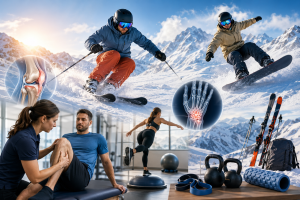
Though they share the same mountains, skiing and snowboarding place different demands on the body, leading to distinct injury patterns.
Skiing involves fixed feet on long levers (skis), which can create significant torque at the knee joint during a fall or a “catch edge” moment.
– MCL and ACL Sprains: The Medial Collateral Ligament (MCL) is the most frequently injured ligament in skiers, often due to the “snowplow” position or twisting falls. The Anterior Cruciate Ligament (ACL) is also at high risk, particularly during backward falls with the knees flexed.
– Skier’s Thumb: A common upper-extremity injury caused by falling onto an outstretched hand while holding a ski pole, which overstretches the Ulnar Collateral Ligament (UCL) of the thumb.
2. Snowboarding: Protecting the Upper Body
Snowboarders have both feet fixed to a single board, which protects the knees from twisting but increases the risk of falls onto the upper body.
– Wrist Fractures and Sprains: Falling forward or backward often leads to “foosh” (fall on an outstretched hand), making wrist injuries the most common snowboarding trauma.
– Shoulder Injuries: Dislocations and AC joint separations are frequent results of high-impact falls or collisions.
The Role of Physiotherapy in Prevention
Many people think of a physiotherapist as someone you see after an injury. However, “pre-habilitation” is one of the most effective ways to stay safe.
Neuromuscular and Balance Training:
Building Sport-Specific Strength:
– Eccentric Strength: Skiing and snowboarding require intense “eccentric” muscle work (where muscles lengthen under load), such as when you’re absorbing bumps or holding a turn. A physio can design a program focusing on slow, controlled squats and lunges to prepare your quads and glutes for these forces.
Managing Injuries: The Road Back to the Slopes
If you do sustain an injury, a structured rehabilitation plan is essential for a safe return to sport.
1. Early Management: Focus on reducing swelling and restoring range of motion. For knee sprains, this might involve isometric exercises to keep the muscles firing without stressing the joint.
2. Staged Progression: Rehabilitation moves from simple movements to complex, functional tasks.
3. Return-to-Sport Criteria: Your physio will use objective tests, such as hop tests and strength symmetry measures to ensure your injured limb is as strong as your healthy one before you head back to the black diamonds.
Actionable Tips for Your Next Trip
1. Warm Up: Never start your first run “cold.” Spend 10 minutes doing dynamic stretches and body weight movements.
2. Pre-Season Training: Start a strength and balance program at least 6-8 weeks before your first trip.
3. Listen to Your Body: Most injuries happen at the end of the day when fatigue sets in. Know when to call it a day!
Skiing and snowboarding are incredible ways to enjoy the winter, but they demand respect for the physical toll they take. By integrating physiotherapy principles – strength, balance, and smart recovery into your routine, you can maximise your time on the snow and minimise your time in the clinic.
Why Strength Matters More Than Stretching for Pain Relief
(And what your body really needs when you feel tight or stiff)
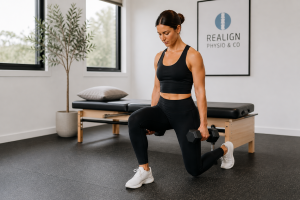
Many people come to us feeling tight, stiff, or uncomfortable — and the first instinct is often to stretch or book a massage.
While these can provide short-term relief, they don’t always address the underlying reason why your body feels that way.
In many cases, what your body actually needs is strength.
That feeling of “tightness” is often misunderstood.
Research has shown that the sensation of muscle tightness isn’t always caused by muscles being physically short. Instead, it can be related to how the nervous system perceives and protects an area.
When a joint or movement lacks stability or control, your body may respond by increasing muscle tension as a protective mechanism.
In other words, your body isn’t necessarily “too tight” — it may be trying to create stability where strength is lacking.
Stretching can temporarily reduce discomfort by:
- Increasing stretch tolerance (how much stretch your brain allows)
- Improving circulation to the area
- Providing a short-term decrease in muscle tone
However, studies suggest that these effects are often temporary, especially if the underlying issue — such as weakness or poor movement control — isn’t addressed.
That’s why many people find themselves repeatedly stretching the same areas (like the neck, shoulders, or hamstrings) without long-term change.
Strength training — when done correctly — helps address the root cause of many common aches and pains.
By improving strength and control, you can:
- Support joints more effectively
- Reduce overload on compensating muscles
- Improve movement efficiency
- Build resilience to daily activities
For example:
If your glutes and core aren’t doing their job well, your lower back may become overworked — leading to that familiar feeling of tightness. Strengthening the right muscles can reduce the need for your body to “protect” that area.
So, should you stop stretching?
Not at all.
Stretching can still play a role, especially when it helps you feel better or prepares your body for movement.
But if you’re relying on stretching alone and not seeing lasting results, it might be time to look at a more structured approach.
At Realign Physio & Co, we focus on combining:
- Targeted strength work
- Movement retraining
- Individualised exercise programs
This might include Clinical Pilates, Personal training sessions, Exercise Physiology, or guided rehab — depending on your needs.
The goal isn’t just to relieve symptoms, but to help your body function better so those symptoms are less likely to return.
If you constantly feel tight in the same areas, it might be worth asking a different question: “Does this area actually need more stretching — or does it need more support?”
Understanding that difference can be the key to long-term improvement.
👉 Book an Assessment
Not sure what your body needs?
Our team at Realign Physio & Co can assess your movement, identify the root cause, and guide you with a personalised plan.
Private Exercise Sessions: The Safest and Most Effective Way to Move When Your Body Needs More Care
Walking into a gym should feel like a positive step for your health — but for many people, it can feel confusing, intimidating, or even unsafe.
This is especially true if you’re:
- Living with back or neck pain
- Recovering from an injury
- Pregnant or returning after pregnancy
- Getting back into exercise after a long break
In these situations, exercise isn’t just about “working out” — it’s about moving correctly, safely, and with purpose.
That’s where private sessions at Realign Physio & Co can make all the difference.
Why Standard Gym Training Isn’t Always Enough
Most gyms are designed for people who are already confident and pain-free. When your body needs more attention, general programs or guesswork can lead to setbacks rather than progress.
Without proper guidance, it’s common to experience:
- Flare-ups of pain
- Poor movement patterns
- Slow progress or plateaus
- Frustration and loss of motivation
Exercise should help you feel better — not leave you second-guessing every movement.
What Makes Private Sessions Different
Private sessions are tailored to your body, your goals, and your current condition. Instead of following a generic plan, you receive:
- A clear and structured approach
- Professional guidance throughout each session
- Ongoing adjustments as your body improves
At Realign Physio & Co, we offer different types of private sessions depending on your needs:
Our Private Services
Private Pilates (1:1)
Ideal for improving strength, mobility, and control through low-impact, guided movement. Particularly beneficial for injury recovery, back and neck pain, and pre/postnatal care.
Exercise Physiology Sessions
Our most clinical option, designed for clients managing injuries or chronic conditions. These sessions are evidence-based and may be eligible for Medicare Care Plans or private health rebates.
Personal Training
A structured and supportive approach for those looking to build strength, improve fitness, and stay accountable with professional guidance.
Online Personalised Programs
A flexible option for those who prefer to train independently or can’t attend regularly. Programs are tailored by our team, giving you clear direction while allowing you to train at your own pace.
Supporting You Through Key Life Stages
Back Pain
Exercise plays a key role in recovery — but only when done correctly. With the right guidance, you can improve strength, movement patterns, and confidence without aggravating symptoms.
Pregnancy & Postnatal
As your body changes, your exercise approach should too. Our sessions are adapted to each stage, helping you stay active while managing common discomforts and supporting your overall wellbeing.
Returning to an Active Lifestyle
After time away from exercise — whether due to injury, a busy period, or loss of routine — getting started again can feel overwhelming. Private sessions provide a structured and supportive way to rebuild strength, regain confidence, and ease back into movement safely, at your own pace.
Start with a Complimentary Session
If you’ve been thinking about starting but weren’t sure where to begin, this is a simple way to take the first step.
We’re offering a complimentary 30-minute private session for new clients, available for:
- Private Pilates
- Personal Training
This session is an opportunity to:
- Understand your body and your goals
- Experience our approach
- Get clear guidance on your next steps
There’s no pressure — just a chance to start in a safe and supportive environment.
Spots are limited, as all sessions are 1:1 and available for a short time.
Simply reply to this newsletter or contact our team to book.
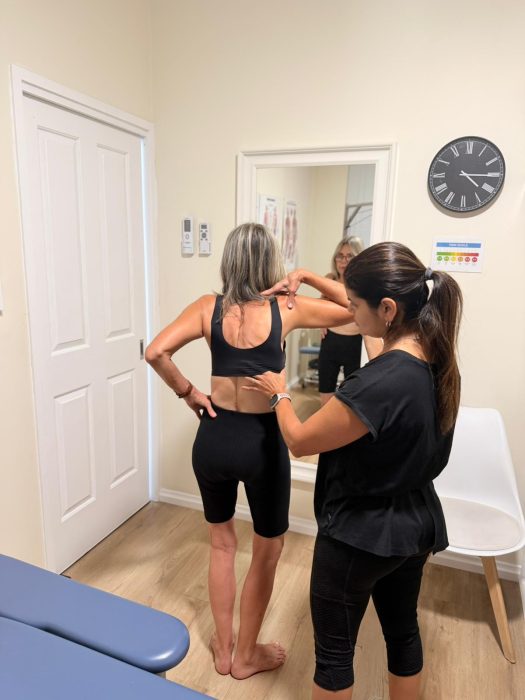
Scoliosis at Every Stage: From Childhood to Adulthood

Scoliosis can affect children, teens, and adults. Learn how Realign Physio provides scoliosis treatment across the lifespan using specific scoliosis exercises based on the GPR method.
Scoliosis is often associated with teenagers — but spinal curves can affect people at any age.
From growing children to adults managing back pain, scoliosis presents differently across life stages. The key to effective scoliosis treatment is understanding how the condition evolves and tailoring care accordingly.
At Realign Physio, we provide evidence-informed scoliosis physiotherapy using specific scoliosis exercises based on the Global Postural Re-education (GPR) method — a whole-body approach designed to improve posture, alignment, breathing, and spinal control.
Childhood & Adolescent Scoliosis
Understanding Adolescent Idiopathic Scoliosis (AIS)
Adolescent idiopathic scoliosis is the most common type of scoliosis. It typically develops between ages 10–16 during rapid growth.
Research shows:
-
Curves may progress during growth spurts
-
Early detection improves long-term outcomes
-
Bracing can reduce progression in moderate curves
-
Scoliosis specific exercises can reduce curve and minimise the risk of progression
How Physiotherapy Helps
For mild to moderate curves, conservative treatment plays an important role. Our approach focuses on:
-
Active spinal elongation
-
Three-dimensional posture correction
-
Muscle chain rebalancing
-
Breathing integration
-
Movement awareness
Biomechanical research suggests that global postural correction strategies can reduce curve magnitude during active self-correction (Dupuis et al., 2018). Emerging clinical studies indicate that GPR-based exercise programs may improve functional and postural outcomes in adolescents (Martin, 2024).
When bracing is indicated, we work collaboratively with medical providers while supporting strength, alignment, and confidence in movement.
Young Adults with Scoliosis
Many young adults either:
-
Continue with a mild curve from adolescence
-
Discover scoliosis incidentally
-
Develop pain linked to posture or muscle imbalance
Common concerns include:
-
Uneven shoulders or hips
-
Rib prominence
-
Back fatigue
-
Discomfort with sport or gym training
Exercise-based interventions improve postural alignment, neuromuscular control and pain levels (Porto et al., 2024).
Our scoliosis-specific exercises, grounded in GPR principles, address global muscle tension patterns rather than isolated strengthening.
This whole-body focus helps:
✔ Improve posture symmetry
✔ Reduce compensatory strain
✔ Enhance breathing mechanics
✔ Build spinal endurance
✔ Improve pain levels
The goal is not just managing the curve — but improving how the body functions as a whole.
Adult & Degenerative Scoliosis
In adulthood, scoliosis may become symptomatic due to natural spinal changes, including disc degeneration and joint wear.
Symptoms may include:
-
Localised back pain
-
Muscle tightness
-
Reduced mobility
-
Decreased balance
For adults, treatment priorities shift toward:
-
Pain reduction
-
Functional strength
-
Postural endurance
-
Load management
Systematic reviews support exercise-based care for adult scoliosis and spinal pain (Everett & Patel, 2007; Schoutens et al., 2020).
Research also shows that GPR-based interventions improve outcomes in chronic spinal pain conditions, including low back pain and neck pain (Lomas-Vega et al., 2017; Gonzalez-Medina et al., 2021; Pillastrini et al., 2016).
By addressing interconnected muscle chains and restoring global alignment, our approach aims to reduce mechanical stress on the spine and improve daily function.
Why a Whole-Body Approach Matters
Scoliosis is not just a sideways curve.
It affects:
-
Muscle balance
-
Rib mobility
-
Pelvic alignment
-
Breathing patterns
-
Postural control
-
Movement coordination
Specific scoliosis exercises based on the GPR method are designed to:
-
Restore muscular balance
-
Improve spinal elongation
-
Enhance neuromuscular control
-
Integrate breathing with posture
-
Support long-term spinal health
Systematic reviews demonstrate that GPR improves pain and function in spinal disorders (Teodori et al., 2011; Lomas-Vega et al., 2017). While long-term scoliosis-specific research continues to develop, early findings are promising for postural and functional improvements.
What to Expect at Realign Physio
Scoliosis treatment at Realign is personalised and stage-specific.
Your assessment includes:
-
Postural analysis
-
Curve pattern screening
-
Breathing assessment
-
Muscle chain evaluation
-
Functional movement testing
From there, we design an individualised program tailored to your age, symptoms, curve presentation, and goals.
Our aim is to help you:
✔ Move with confidence
✔ Improve alignment
✔ Reduce pain
✔ Support spinal longevity
Scoliosis Treatment at Every Stage of Life
Scoliosis does not disappear after adolescence — but neither does the opportunity to improve how your spine functions.
Whether you are:
-
A parent concerned about your child’s posture
-
A teenager recently diagnosed
-
A young adult wanting better alignment
-
An adult managing degenerative scoliosis
There are meaningful, evidence-informed steps you can take.
At Realign Physio & Co, we provide scoliosis treatment across the lifespan using specific exercises based on the GPR method — helping you build strength, balance, and confidence at every stage of life.
Key References
Romano, M., & Minozzi, S. (2012). Exercises for adolescent idiopathic scoliosis. Cochrane Database of Systematic Reviews.
Dupuis, S., et al. (2018). Global postural re-education in pediatric idiopathic scoliosis. BMC Musculoskeletal Disorders.
Martin, M. (2024). Global postural re-education in adolescents with idiopathic scoliosis. Université de Montréal.
Lomas-Vega, R., et al. (2017). Effectiveness of global postural re-education for spinal disorders. American Journal of Physical Medicine & Rehabilitation.
Gonzalez-Medina, G., et al. (2021). Effectiveness of GPR in chronic non-specific low back pain. Journal of Clinical Medicine.
Pillastrini, P., et al. (2016). GPR in chronic neck pain. Physical Therapy.
Everett, C. R., & Patel, R. K. (2007). Nonsurgical treatment in adult scoliosis. Spine.
Schoutens, C., et al. (2020). Nonsurgical treatments for adult degenerative scoliosis. Pain Medicine.
Teodori, R. M., et al. (2011). Global Postural Re-education: Literature review. Brazilian Journal of Physical Therapy.
Your spine is stronger than you’ve been told
If you’ve been living with neck or back pain, it’s easy to start believing that something is damaged, fragile, or permanently wrong.
But pain does not always equal damage.
In most cases, the spine is a strong, adaptable structure designed to move, load, and recover. With the right support and guidance, it can become resilient again — even after long‑standing or recurrent pain.
Modern pain science shows that spinal pain is often multifactorial. This means it’s influenced by a combination of factors, including:
- Movement habits and postural load
- Strength, control, and endurance of spinal muscles
- Previous injuries or flare‑ups
- Stress, fatigue, and nervous system sensitivity
- Fear of movement or activity avoidance
Imaging such as X‑rays or scans can show structure, but they don’t explain how your spine functions — or why pain persists. That’s why effective spinal care looks beyond scans and focuses on how you move, load, and feel day to day.
At Realign Physio & Co, we specialise in spinal physiotherapy for complex and persistent spinal conditions. Our care is evidence‑based, education‑led, and centred on restoring confidence in movement.
We prioritise:
- Clear explanations so you understand what’s happening in your body
- Safe, progressive movement tailored to your capacity
- Long‑term spinal strength and resilience, not fear or avoidance
Our goal isn’t just short‑term pain relief — it’s helping you build a spine that can tolerate life, work, exercise, and the activities you enjoy.
For some patients, we also integrate Global Postural Re‑education (GPR®) — a specialised French physiotherapy method particularly useful for complex or long‑standing spinal presentations.
GPR® combines:
- Sustained therapeutic postures
- Gentle manual therapy and axial spinal traction
- Whole‑body postural correction
This approach allows us to address posture, pain, strength, spinal stability, and postural endurance together, rather than in isolation. It can be especially helpful when pain is recurrent, widespread, or influenced by long‑term postural patterns.
Spinal physiotherapy at Realign may be suitable if you’re experiencing:
- Neck or back pain
- Disc injuries or sciatica
- Whiplash or post‑accident pain
- Scoliosis (teens or adults)
- Pain that keeps returning despite previous treatment
Every spine — and every person — is different. Your care is always individualised to your presentation, goals, and tolerance.
Your spine isn’t fragile.
It isn’t failing you.
It may simply need the right support, education, and progressive movement to work well again.
Recent Comments