
Staying on the Slopes: A Physiotherapists Guide to Skiing and Snowboarding Injury Prevention and Recovery
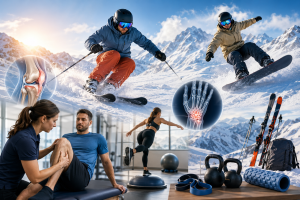
Though they share the same mountains, skiing and snowboarding place different demands on the body, leading to distinct injury patterns.
Skiing involves fixed feet on long levers (skis), which can create significant torque at the knee joint during a fall or a “catch edge” moment.
– MCL and ACL Sprains: The Medial Collateral Ligament (MCL) is the most frequently injured ligament in skiers, often due to the “snowplow” position or twisting falls. The Anterior Cruciate Ligament (ACL) is also at high risk, particularly during backward falls with the knees flexed.
– Skier’s Thumb: A common upper-extremity injury caused by falling onto an outstretched hand while holding a ski pole, which overstretches the Ulnar Collateral Ligament (UCL) of the thumb.
2. Snowboarding: Protecting the Upper Body
Snowboarders have both feet fixed to a single board, which protects the knees from twisting but increases the risk of falls onto the upper body.
– Wrist Fractures and Sprains: Falling forward or backward often leads to “foosh” (fall on an outstretched hand), making wrist injuries the most common snowboarding trauma.
– Shoulder Injuries: Dislocations and AC joint separations are frequent results of high-impact falls or collisions.
The Role of Physiotherapy in Prevention
Many people think of a physiotherapist as someone you see after an injury. However, “pre-habilitation” is one of the most effective ways to stay safe.
Neuromuscular and Balance Training:
Building Sport-Specific Strength:
– Eccentric Strength: Skiing and snowboarding require intense “eccentric” muscle work (where muscles lengthen under load), such as when you’re absorbing bumps or holding a turn. A physio can design a program focusing on slow, controlled squats and lunges to prepare your quads and glutes for these forces.
Managing Injuries: The Road Back to the Slopes
If you do sustain an injury, a structured rehabilitation plan is essential for a safe return to sport.
1. Early Management: Focus on reducing swelling and restoring range of motion. For knee sprains, this might involve isometric exercises to keep the muscles firing without stressing the joint.
2. Staged Progression: Rehabilitation moves from simple movements to complex, functional tasks.
3. Return-to-Sport Criteria: Your physio will use objective tests, such as hop tests and strength symmetry measures to ensure your injured limb is as strong as your healthy one before you head back to the black diamonds.
Actionable Tips for Your Next Trip
1. Warm Up: Never start your first run “cold.” Spend 10 minutes doing dynamic stretches and body weight movements.
2. Pre-Season Training: Start a strength and balance program at least 6-8 weeks before your first trip.
3. Listen to Your Body: Most injuries happen at the end of the day when fatigue sets in. Know when to call it a day!
Skiing and snowboarding are incredible ways to enjoy the winter, but they demand respect for the physical toll they take. By integrating physiotherapy principles – strength, balance, and smart recovery into your routine, you can maximise your time on the snow and minimise your time in the clinic.